A young child living with HIV cannot manage their treatment alone.
They cannot read the instructions on a medicine bottle, travel eight kilometres to a clinic, or understand why they must take medication every day – even when it tastes unpleasant or makes them feel unwell. They are entirely dependent on the adult caring for them.
When that caregiver is struggling with poverty, food insecurity, stigma, isolation or the cost of reaching a clinic, the child’s health is placed at risk – not because they are unloved, but because the circumstances surrounding their care can become overwhelming.
For years, CHIVA Africa has mentored healthcare workers supporting children living with HIV in some of South Africa’s most underserved communities. Through this work, we became increasingly concerned about children whose viral loads fluctuated over time. This can be a warning that treatment is not consistently controlling the virus, leaving a child vulnerable to illness and treatment failure.
We kept asking ourselves: What is happening in these children’s homes? What makes it difficult to give medication every day, year after year? What support do caregivers need to keep the children in their care healthy?
We realised that clinical records could tell us what was happening – but not always why. To understand that, we needed to listen to caregivers themselves.
With grant support secured through The Open University, CHIVA Africa has begun conducting one-to-one interviews with caregivers of children living with HIV. Our aim is to understand the realities behind the clinical data and ultimately develop practical, caregiver-led solutions that give vulnerable children a better chance of remaining healthy.
Some of our first conversations took place under a tree or inside the vehicle in which we had travelled. These simple spaces became places where caregivers could speak openly about experiences that are so often hidden or unheard.
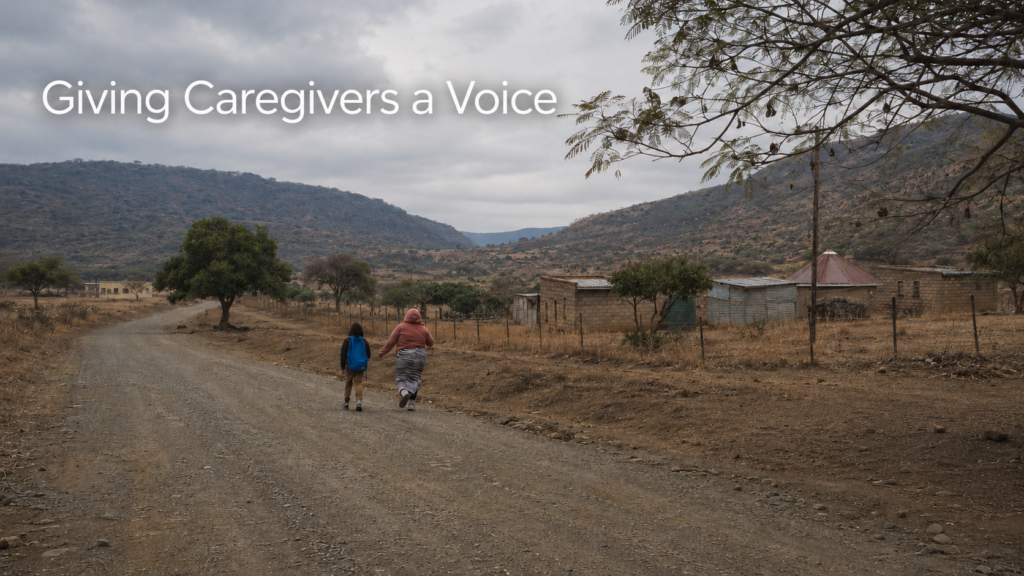
Our journeys into deeply rural communities brought us face to face with the harsh conditions in which families are expected to manage a child’s lifelong treatment. In some communities, the river is the only source of water. Subsistence farming and a child support grant of approximately R580 per month may be all a household has to provide food and meet its most basic needs.
The nearest clinic may be only eight kilometres away, but severely damaged roads make the journey difficult and expensive. A one-way taxi trip can cost R30. For a caregiver who must pay for the return journey while still finding food for the family, attending a clinic appointment may require sacrificing another essential need.
For a young child, these circumstances are beyond the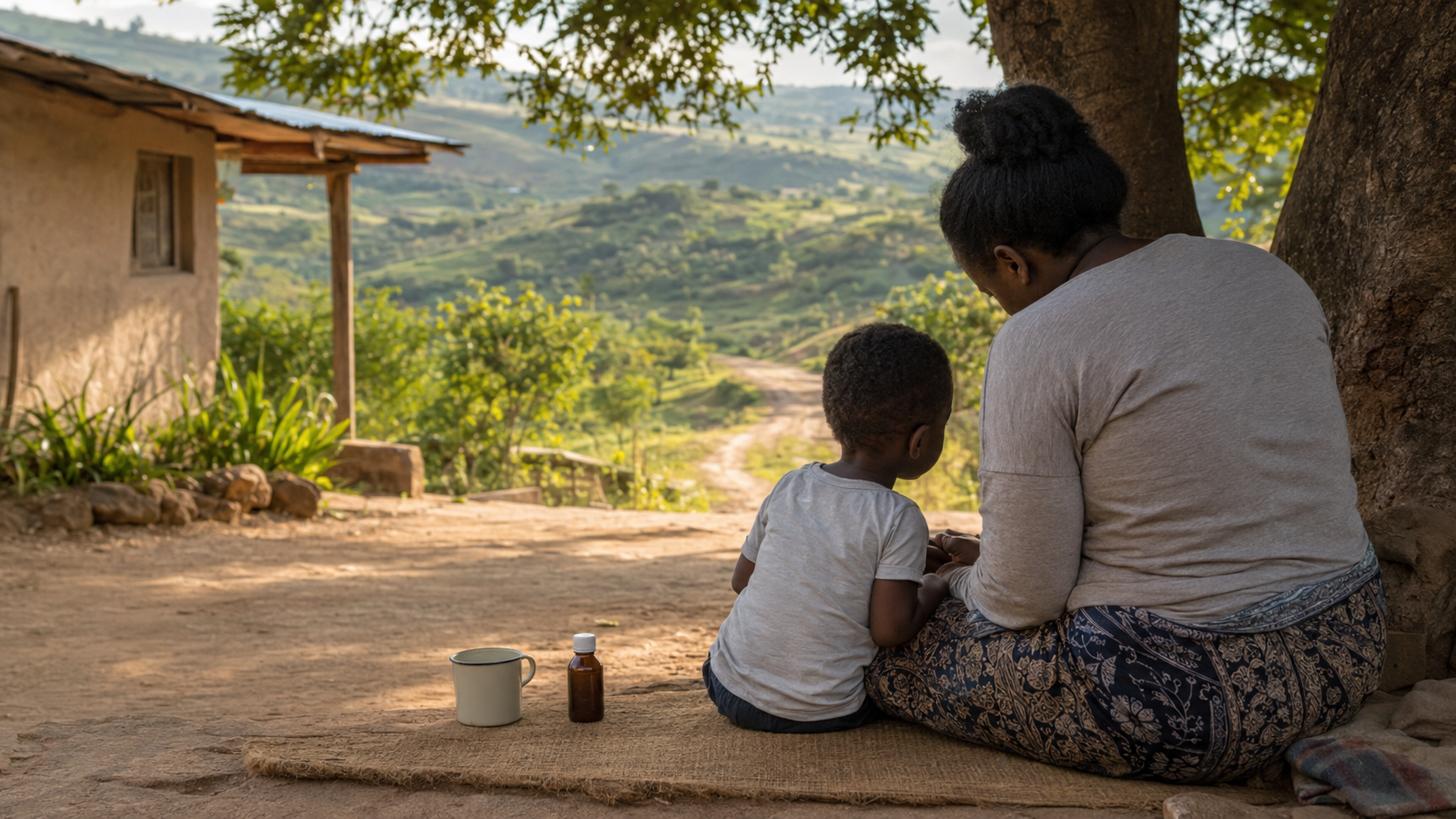 ir understanding and completely beyond their control. Their survival depends on whether the adults around them have the knowledge, resources and support to provide their treatment consistently. Behind every fluctuating viral load is therefore not simply a number, but a vulnerable child, and often a caregiver doing everything possible within extraordinarily difficult circumstances.
We are still reviewing the interviews, but one message has already emerged with great clarity: caregivers deeply valued being given the opportunity to tell their stories.
Each spoke about different experiences of treatment, acceptance, family support, stigma and fear. Yet a common thread ran through every conversation – they appreciated that someone had taken the time to listen without judgement.
We did not speak about medication or HIV in clinical terms. We listened to their lives, their hardships, their fears and their hopes for the children who depend on them.
To our donors and partners: your support makes this work possible. Because of you, caregivers whose experiences are rarely acknowledged are being heard. Their voices can now help us shape more compassionate and practical support – support that recognises the reality of their circumstances and protects the health of the children in their care.
Listening is only the beginning. Our responsibility is to turn what we hear into meaningful action, so that no child’s future is determined by poverty, distance, stigma or circumstances entirely beyond their control.
Every caregiver deserves to be heard. Every vulnerable child deserves the chance to grow, thrive
and look forward to a healthy future.
If you would like to get involved or donate, please click on our donation button


 Dr Mo Archary is a Paediatric Infectious Diseases Specialist at King Edward VIII Hospital, Durban and the University of KwaZulu-Natal: Nelson R Mandela School of Medicine.
 Shaun became a trustee for CHIVA Africa in February 2019. He is a South African qualified lawyer and holds the position of Chief Legal Officer at Cairn Capital, a leading European asset manager.
 Fiona joined the Board at CHIVA Africa in 2019. Fiona studied Law at Oxford University and started her career as a Barrister practicing in Chancery chambers before moving into financial services.
 Lauren joined the board in 2019, and is a lawyer by training and built a successful legal career in South Africa, specialising in public interest and media law. Lauren has lectured in media law, ethics and public interest law and takes a special interest in furthering the cause of women and those disadvantaged in South Africa.
 Dr Moshal is the founder of CHIVA Africa and CHIVA South Africa and has chaired the CHIVA Africa Board of Trustees since its registration as a charity in 2009. Born and raised in South Africa, Karyn graduated in medicine from the University of Cape Town in 1988.